

The refactorable warehouse. Verify early, test properly, and refactor safely.
Website · Docs · Quickstart · Roadmap
Change your warehouse as often as your code. SQLBuild brings compile-time checks, end-to-end tests and safe renames to your SQL, so change stops being risky. It is a free, open-source framework for SQL and Python data pipelines, and it keeps its state in append-only tables in your own warehouse: no external state database, no manifest files and no paid tier.
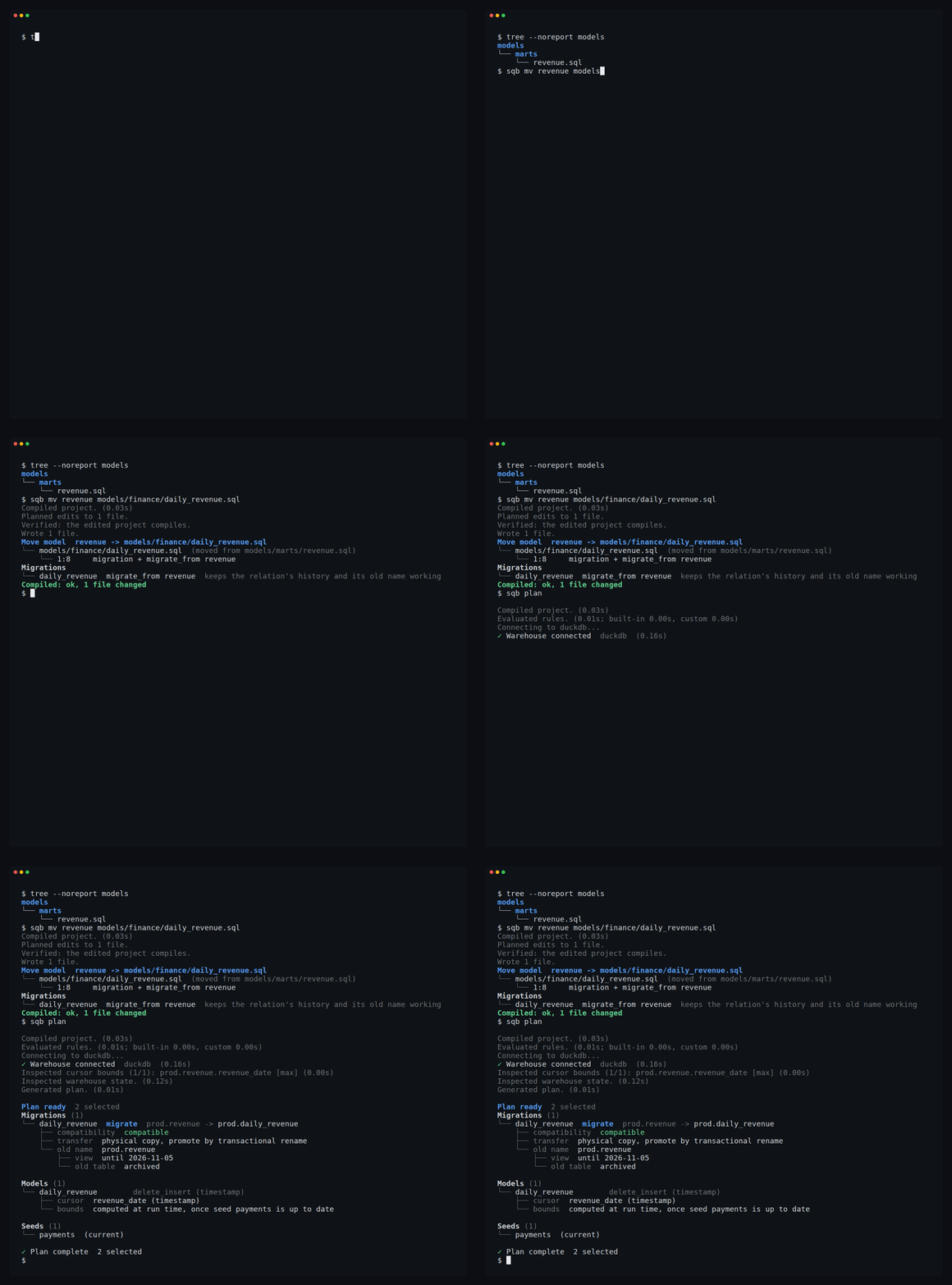
Move an incremental model to a new folder and name with sqb mv, and sqb plan migrates its table
instead of rebuilding it.
pip install sqlbuild
sqb playground waffle-shop
cd waffle-shop
sqb plan
sqb build
sqb test
The playground runs on local DuckDB, with no warehouse credentials.
- Compile-time checks. SQLBuild resolves references, validates SQL, infers column types, checks contracts and computes column lineage, all offline. A typo'd column fails in seconds, not halfway through a warehouse run.
- Your conventions as rules. Built-in and custom Python rules turn review comments into compile errors: for example, marts can't read sources directly, or every final model declares its key.
- Tests across models. SQL tests mock the sources and check the result through every model in between, with macros as test helpers. Macro, UDF and table-function tests are built in.
- End-to-end scenarios. Build the real graph against fixture data, capture fixtures from the warehouse, and replay them locally on DuckDB in CI. See scenarios.
- Audits and diffs. Audits run before data reaches the target table, and data diffs compare dev against prod or any query.
- Renames keep their history.
sqb renameandsqb mvupdate every reference, and the next build migrates the existing table instead of rebuilding it. The old name keeps working through a compatibility view.sqb rename <model>.<column>renames an incremental model's column in place. - Replay on change. When a model's SQL changes, choose how far back to reprocess, from only the
new data to the last 14 days to a full rebuild, with
replay_on_change. - Macros don't have to be global. Keep macros, enums and constants next to the models that use
them, and preview what a move would break with
sqb scope. See declaration scopes. - Tidy up safely. The janitor archives stale tables before anything is deleted.
Ingestion with Python loaders, and Python tasks, assets and checks, run in the same graph as your SQL models. See the docs for everything else.
Each demo is real output from the example projects in website/examples,
running on local DuckDB.
daily_revenue declares contract enforced. Renaming waffles_sold to units_sold in the
SELECT fails at compile time, before anything reaches the warehouse.
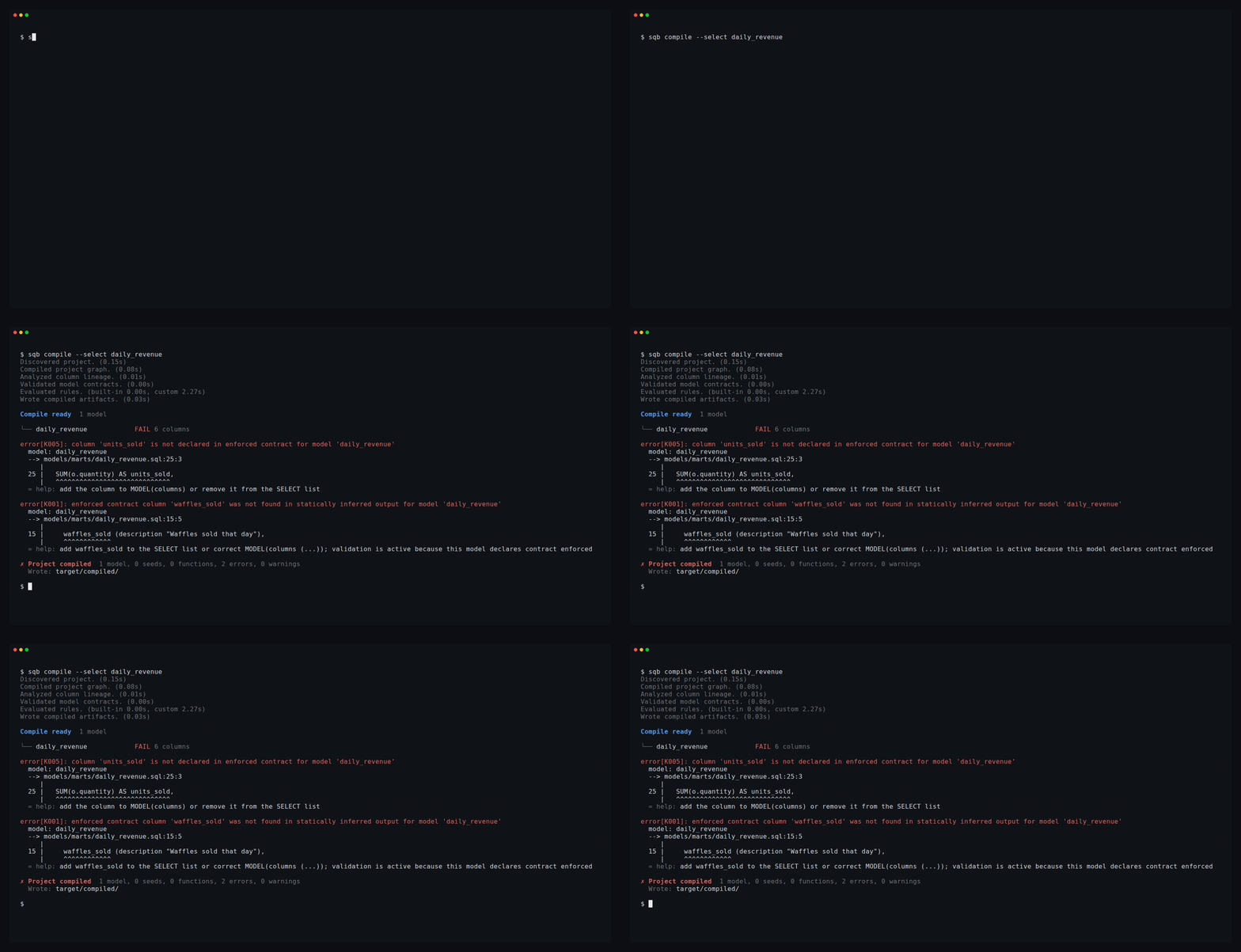
Both sides are reported: the new column isn't in the contract, and the declared one is gone.
Rules are Python functions in your project. This one, from
rules/layers.py, says marts must read sources
through staging:
from sqlbuild.rules import Finding, Model, RuleContext, rule


@rule(
    code="XSQBRARCH001",
    message="Marts must read sources through staging",
    remediation="Reference a staging model with __ref() instead.",
)
def marts_use_staging(*, model: Model, ctx: RuleContext) -> list[Finding]:
    layer = ctx.project.tree.relative_parts(path=model.path, under="models")[0]
    sql = ctx.sql.for_model(model).authored.source
    if layer != "marts" or "__source(" not in sql:
        return []
    line = sql[: sql.index("__source(")].count("\n") + 1
    return [ctx.finding(subject=model, line=line)]
A mart that reads __source("raw__payments") directly now fails, and so does the unit test that
has no mock for it:
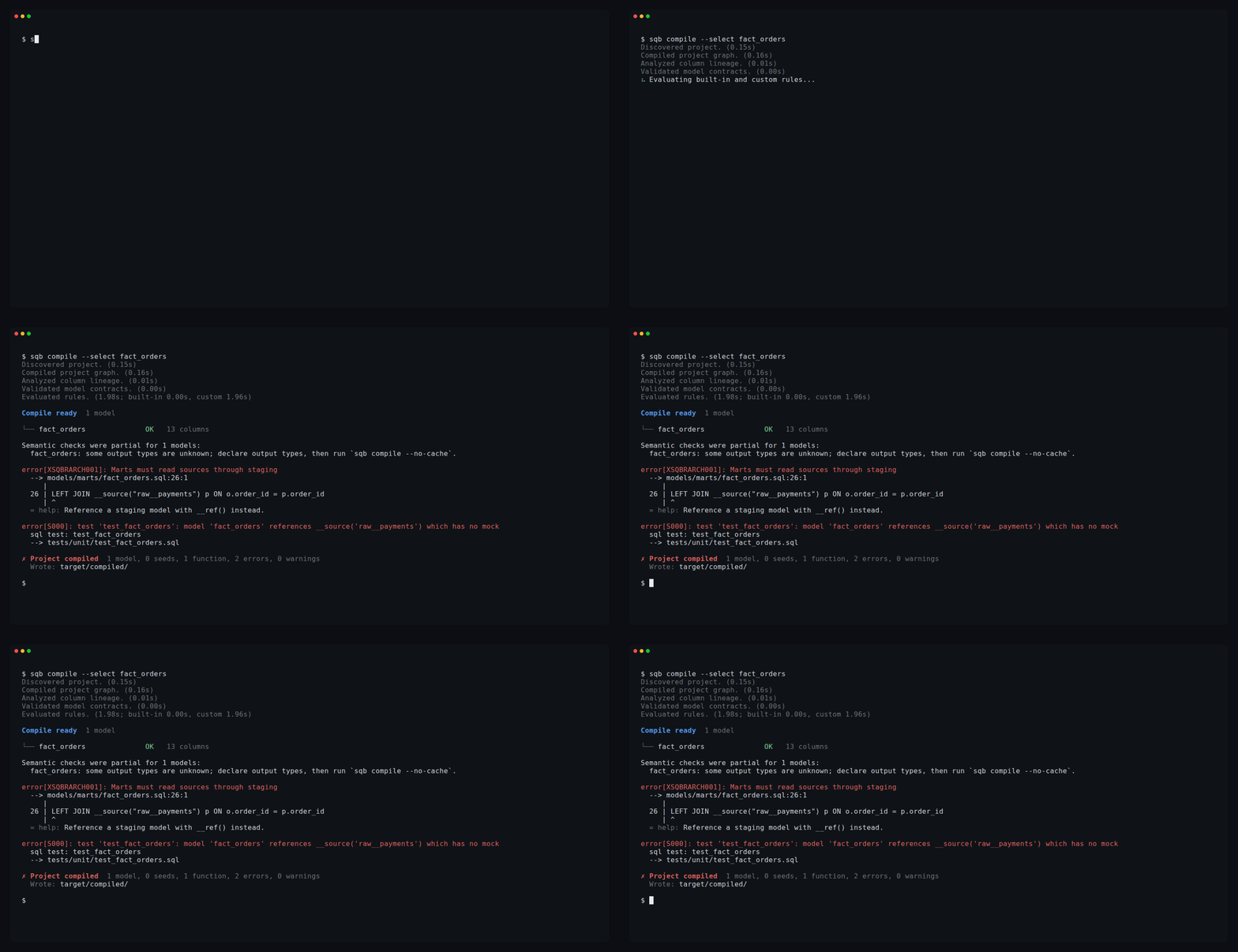
See rules.
sqb scope --as-path previews moving a model before you move it.

Look at Lost and Invalidated usages: the model uses an enum and a macro that are private to
models/marts, so moving it would break both.
A model is a SQL file with a MODEL() header and a SELECT:
MODEL (
  description "One row per order",
  materialized table,
  columns (
    order_id (audits [not_null, unique]),
  ),
  tags [marts],
);

SELECT
  o.order_id,
  o.customer_id,
  p.amount_cents AS total_cents,
  @cents_to_dollars("p.amount_cents") AS total_dollars
FROM __ref("stg_orders") o
JOIN __ref("stg_payments") p USING (order_id)
Macros are plain Python functions that return SQL, kept next to the models that use them:
# models/marts/_sqlbuild/_macros/currency.py
def cents_to_dollars(column: str) -> str:
    """Convert a cents integer column to a dollars decimal with two decimal places."""
    return f"ROUND(({column}) / 100.0, 2)"
A test mocks the sources and asserts on the model, resolving every model in between from its real SQL:
TEST();

WITH
__source__raw__orders AS (
  SELECT
    1 AS id,
    100 AS customer_id,
    2 AS waffle_type_id,
    3 AS quantity,
    CAST('2026-04-01 10:00:00' AS TIMESTAMP) AS ordered_at,
    'completed' AS status
),
__source__raw__payments AS (
  SELECT
    10 AS id,
    1 AS order_id,
    1500 AS amount_cents,
    'credit_card' AS payment_method,
    CAST('2026-04-01 10:05:00' AS TIMESTAMP) AS paid_at,
    'success' AS status
),
__expected__fact_orders AS (
  SELECT 1 AS order_id, 100 AS customer_id, 1500 AS total_cents, 15.00 AS total_dollars
)| Warehouse | Status |
|---|---|
| Snowflake | Supported |
| DuckDB | Supported |
| MotherDuck | Supported |
| PostgreSQL | Supported |
| BigQuery | Beta |
| Databricks | Beta |
| SQL Server | Beta |
Snowflake is the main target. Beta adapters build, test and plan, but have had less production use so far. See adapters.
SQLBuild is Apache 2.0 and will stay free: no paid tier, no commercial edition, and no feature held back for one. Its state lives in your warehouse, next to your data. See the roadmap for what's next.
Contributions are welcome. See CONTRIBUTING.md.
SQLBuild is licensed under the Apache License 2.0.