





I build trading platforms and then I run them. The engineering is the easy half; deciding what should exist, and what should never ship, is the job.
Fifteen years building the production systems behind systematic investing — data platforms, research platforms, and live trading pipelines. Eight years at BlackRock, then PIMCO, and currently at a global asset manager in Los Angeles.
Three times over, the same problem: closing the gap between quant research and production, so researchers can ship models without an engineering bottleneck in the way.
The trading side is the point: one code path from backtest to live, risk that fails closed, and research that is allowed to say "no edge" before money finds out.
Start here: three projects, each solving a different problem, each with a live page or code you can try: autonomous-quant-researcher (deciding what is true: an LLM proposes, code decides) · research2prod (shipping it: research code that is already production code) · mft-engine (running it: one Rust code path for backtest and live)
All November 2026, Henry Zhang, Independent Researcher. Each one pre-registered, with the code public.
- Hard to Fool: A Bounded LLM Research Loop for Quantitative Finance, and What Two Dozen Campaigns Found · arXiv:2611.06607 · SSRN An LLM proposes trading hypotheses, trusted code decides, and most of what two dozen campaigns found was a documented no.
- Short Windows, Unmodelled Costs, Unknown Cutoffs: A Pre-Registered Evidence Audit of 91 LLM Trading Papers · SSRN · data and code Of 75 papers with a trading test, half deduct no costs, the median test window is 12 months, and 98% of those whose test may overlap the model's training data do not control for it.
- Testing the Premises Behind Popular Technical-Analysis Scripts under Pre-Registration · SSRN The shared premises behind popular drawn indicators (Fibonacci levels, regression channels, ribbons, squeezes), each tested with one frozen rule: none is supported, and every one did worse than being long in validation.
- The Zero-Days-to-Expiry Put-Credit Premium from Traded Option Bars: Real, Mostly Not Drift, and Priced by First-Day Shocks · SSRN Priced from traded option bars, the 0DTE SPY put-spread premium is real and mostly not market drift, but it misses the pre-registered bar because its losses come on the first day of shocks nobody forecasts.
Work in progress, registered on OSF before any outcome is scored:
- Do GPU Rental Prices Lead Consensus Revisions? A Registered Report with a Hash-Chained Protocol (Stage 1 registered report)
- A Pre-Registered Forward Test of an LLM News Reader in Event Contracts (pre-registration)
- Can an LLM Turn Published Trading Rules into Faithful Code? (pre-registration)
- Frozen Forward Rule: Options Flow in Spot Crypto ETFs and the Two-Week Ether Return (frozen forward rule)
- When Not to Price an IPO: A Frozen Model's Pre-Stated Band for Anthropic's First Close (forward test plan)
An LLM proposes trading hypotheses; trusted code decides whether they are true.
My own idea: an autonomous quant researcher, a bounded research loop that
borrows the fixed experiment contract of Karpathy's autoresearch and the
loop-as-artifact discipline of Loop Engineering, then adds what finance forces
on you: the model never writes code (declarative JSON
hypotheses, trusted interpretation), three chronological stages with a one-use
holdout, acceptance as a gate set rather than a metric, admission-time
de-duplication, and a hash-chained ledger that keeps every refutation.
Most of what comes back is a documented no, and the ledger keeps those too — a refutation nobody wrote down gets rediscovered, at cost, by the next person. Now open source: the runner, the declarative contract, fixed validators, the options backtest mechanics, a public pre-registration with its hash-chained ledger, and 500+ tests that need neither network nor keys.
→ github.com/henryzhangpku/autonomous-quant-researcher
Paper: Hard to Fool: A Bounded LLM Research Loop for Quantitative Finance, and What Two Dozen Campaigns Found (arXiv:2611.06607, November 2026; also on SSRN, doi:10.2139/ssrn.7682019)
The guided self-service model from my PIMCO work, rebuilt in the open. A researcher who can write working Python
still has no idea what happens after "the backtest looks good" — and the
usual answer is a quant developer rebuilding the signal from a notebook,
followed by weeks of finding out why the two disagree. research2prod removes the
conversion step entirely: the project template makes the research code
already be production code. One decorator, an as-of view a signal cannot
reach past, data contracts, a mechanical promotion gate (look-ahead,
determinism, declaration, contract, backtest floors), an immutable
certificate with a golden output, and research2prod export — a deployable bundle
with a runner, a Dockerfile and a schedule, generated without translating
anything. Every command ends by naming the next one.
→ github.com/henryzhangpku/research2prod
The systematic-trading discipline from my PIMCO work, on a modern Rust stack: an engine for mid-frequency trading, where decisions are made on minute bars and positions last minutes to hours. The reasoning signals come from where markets now talk: live Kalshi strike ladders turned into an implied distribution, and public posts scored by a fast System One classifier at about 120 ms a post. Code, not the model, decides.
One event loop runs backtest and live paper alike, so research and production cannot disagree. Risk fails closed; replay is deterministic to the decision fingerprint; every idea tried goes on a hash-chained experiment ledger, kept or killed; and a test fails the build if an order path or a secret ever appears. The engine decides in about 2 microseconds.
It reads 331 live perpetuals across five venues and where the top wallets are positioned. Results after costs are published as they came out.
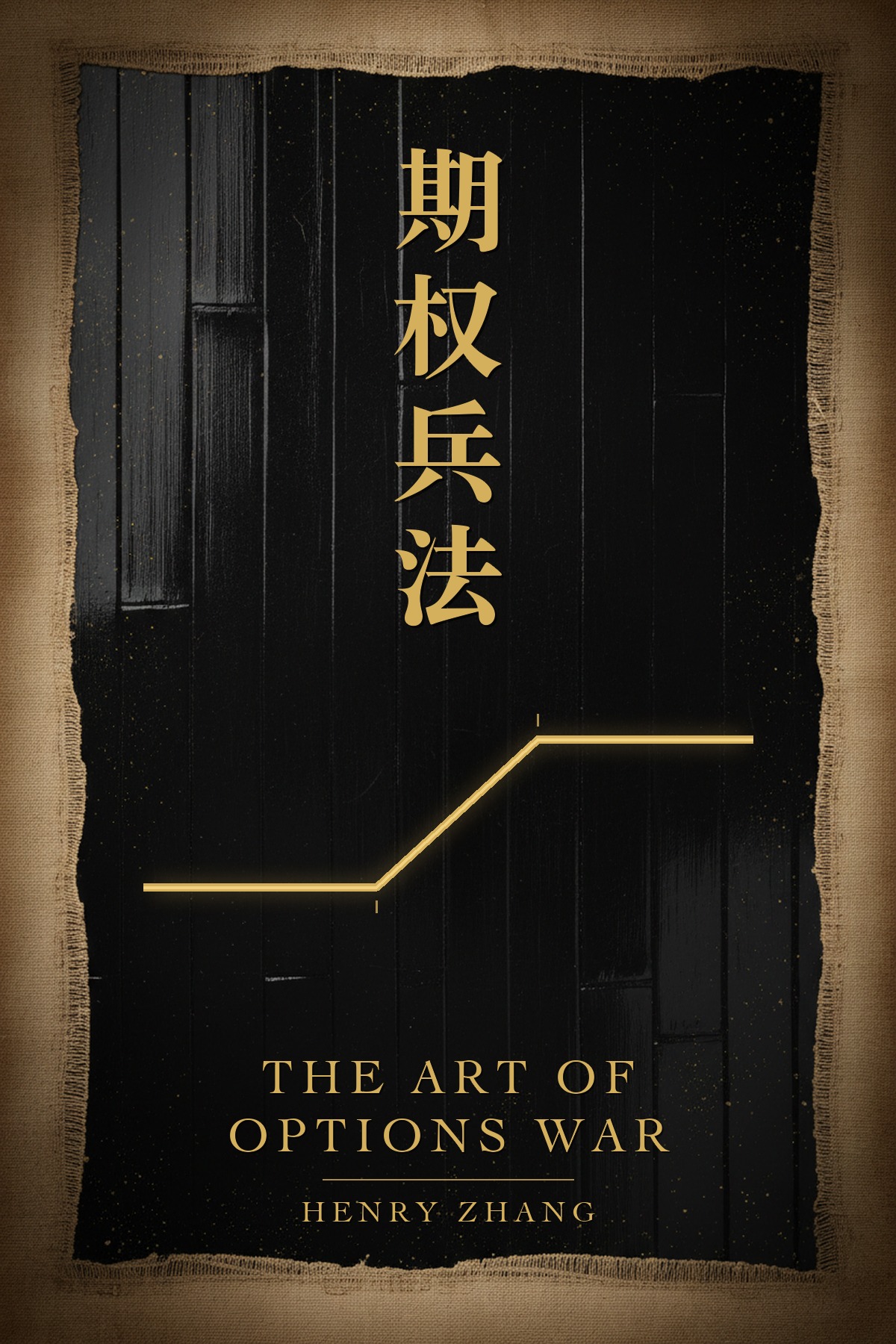
The Art of Options War · 期权兵法 Sun Tzu's thirteen chapters, read against one trade: the defined-risk credit spread. |

The Options Underwriter · 期权承保 The same trade, run as an insurance company: policy, price, reserves, claims, catastrophe. |

The Counted Trade · 算而后战 The buyer's book: the Thirty-Six Stratagems, read for the buyer of asymmetric options. |
All three bilingual and free to read. No forecasts, no signals, no performance claims.
For reference, the same discipline outside Python, each with a live page: tickforge (C++20 tick store and parameter sweeps) · java-bidder (Java 21, hard-deadline bidder) · rails-nl-screen (Rails 8 plain-English screen).
| autonomous-quant-researcher | An LLM proposes trading hypotheses, trusted code decides — staged holdouts, gate sets, and a hash-chained ledger of every refutation. Paper: arXiv:2611.06607, SSRN |
| research2prod | Write the signal once; it is already production code — the guided bridge from quant research to a scheduled, audited job |
| mft-engine | Mid-frequency trading in Rust: Kalshi probability ladders and classifier-scored posts as signals, code as the gate, one code path for backtest and live paper, an experiment ledger |
Everything else is on the repositories tab.
| Global asset manager | Lead Quantitative Engineer, VP — research platform (2025 – present) |
| PIMCO | Quantitative Developer / Architect, VP — systematic futures & FX trading |
| BlackRock | Quantitative Developer, VP — systematic equity signals, 8 years |
| Morgan Stanley | Commodities Developer — trading systems, Shanghai / Singapore |
MS Software Engineering, Peking University · BS Computer Science, Nankai University
LinkedIn · Substack · officialhenryzhang.com · ORCID · SSRN · arXiv