



Portability · Creation · Validation · Automation


Three projects. One idea: make AI-agent workflows more useful, more portable, and easier to trust.
Will your Agent workflow survive another OS? Find hidden assumptions across |
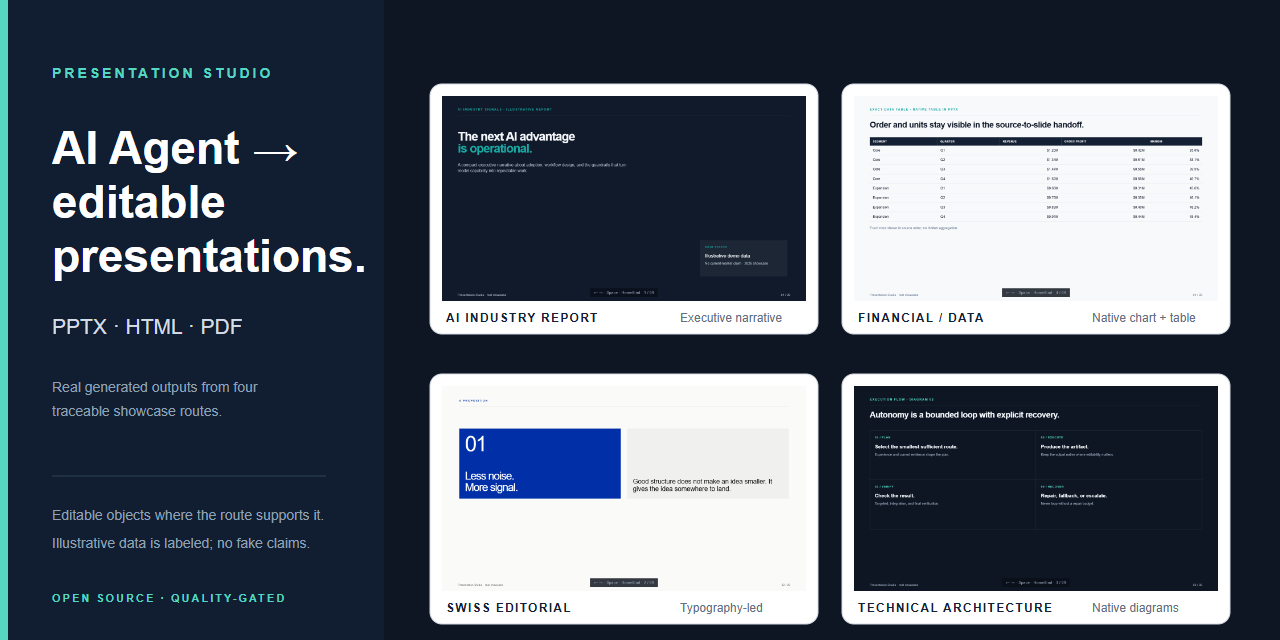
From prompt to presentation artifact. Editable PPTX · HTML · PDF |
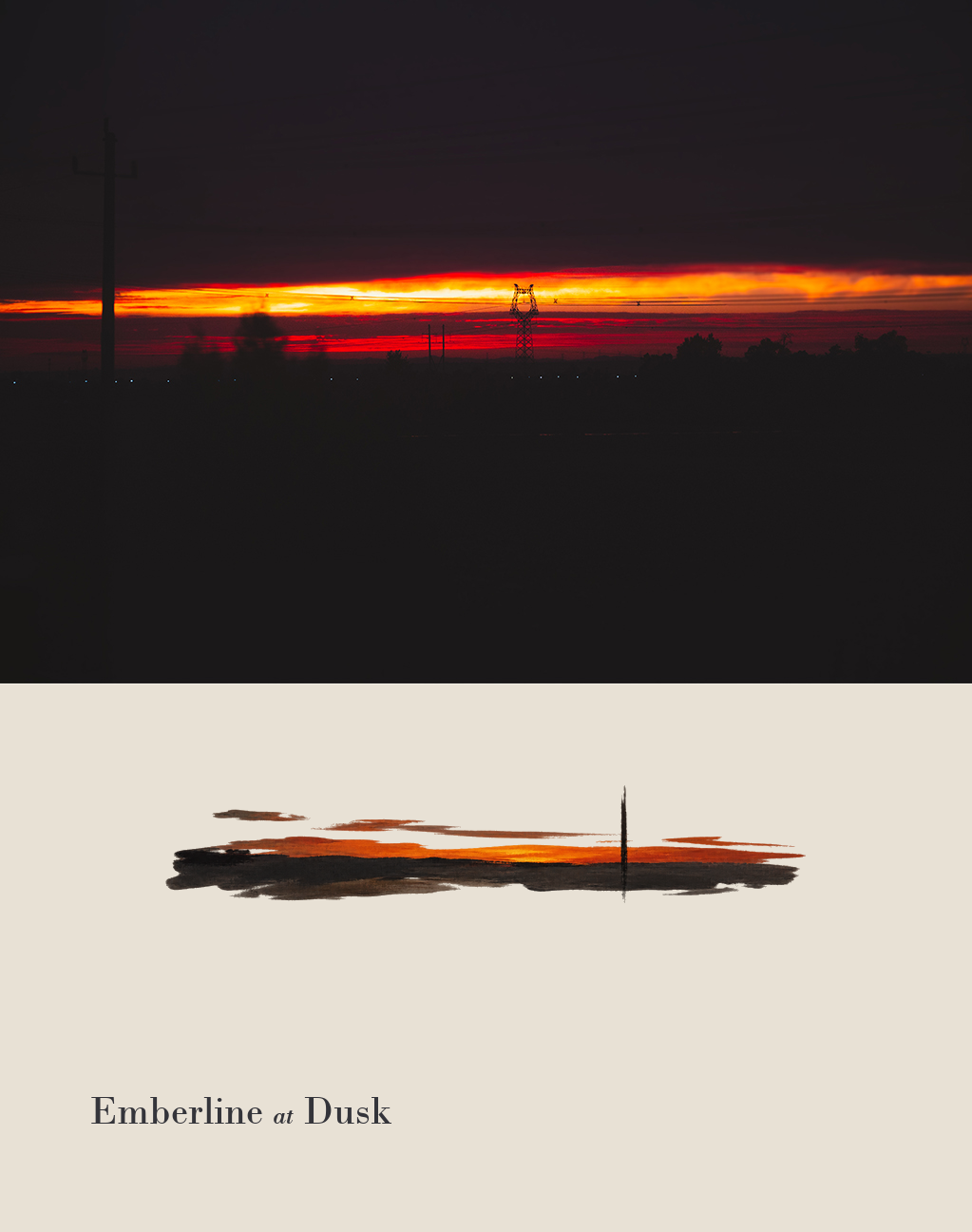
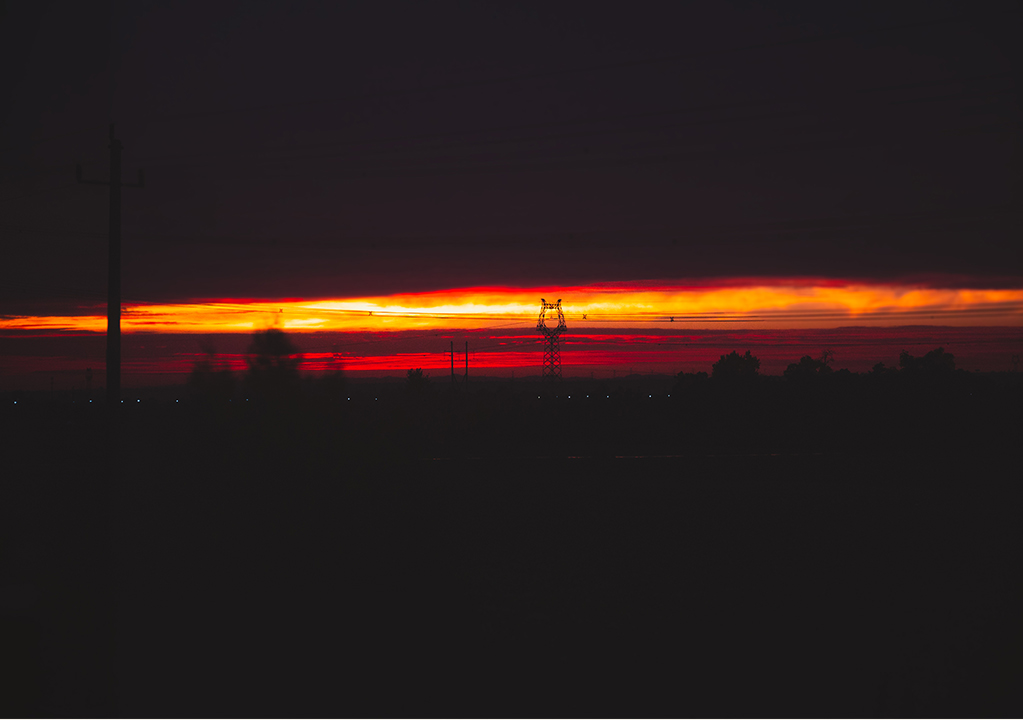
Keep the photograph. Change the language. Source-faithful editorial art |
Find the OS assumptions that break AI-agent workflows.
AI-agent workflows often look portable right up until they meet a different shell, filesystem, package manager, or runtime.
agent-xplat turns those hidden assumptions into an explicit:
OS × Shell × Runtime
        ↓
Compatibility Matrix
        ↓
Actionable Findings
It scans Agent Skills, workflow instructions, scripts, configuration, Python, Node, shell commands, and related project files.
What makes it interesting
- 🧭 Eight target environments across Windows, macOS, and Linux
- 🧠 Deterministic, explainable findings instead of opaque AI guesses
- 🧪 Real cross-OS verification paths
- 📦 Published Python CLI
- 🤖 JSON / SARIF / Markdown outputs built for agents and CI
- 🛠️ Safe deterministic fixes where equivalence can actually be proven
python -m pip install agent-xplat
agent-xplat scan .


Turn prompts and structured data into presentation artifacts that can be opened, edited, inspected, and reused.
Instead of treating a presentation as one giant generation prompt, Presentation Studio treats it as a production pipeline.
Brief / Data
     ↓
Capability Detection
     ↓
Product + Style Routing
     ↓
Generation Engine
     ↓
Editable Artifact
     ↓
Validate → Render → Inspect → Repair
The fun part: the route changes depending on what the host can actually do.
Built around
- 🧩 Agent-compatible capability routing
- ✏️ Editable PPTX workflows
- 🌐 PPTX · HTML · PDF · PNG · SVG output families
- 📐 Exact-data preservation contracts
- 🎛️ Product recipes and style profiles
- 🔎 Rendered visual inspection
- 🔁 Repair-and-verify quality loops
- 📦 Reproducible release packaging



Turn photographs into editorial artworks without losing the photograph itself.
This project explores a question I like:
How much can an image change while the source remains factual?
The answer is a workflow that separates the original photograph from the creative layer.
Source Photograph
      ↓
Scene Understanding
      ↓
Source-Derived Relationships
      ↓
Controlled Abstraction
      ↓
Adaptive Layout
      ↓
Editorial Typography
      ↓
Validation + Visual QA
What it explores
- 📷 Source-faithful image composition
- 🧭 Scene-aware adaptive layouts
- 🖌️ Controlled abstraction
- 🎚️ Explicit creative controls
- 🔤 Exact local typography on the verified path
- ✅ Machine validation + visual QA
- 🗂️ Series-level visual consistency
- 🤖 Capability-based Agent workflows


These projects look different on the surface:
agent-xplat
     │
     ├── Can the workflow run here?
     │
Presentation Studio
     │
     ├── Can the agent produce a real artifact?
     │
Photo Abstract Editorial
     │
     └── Can creative output stay controlled and verifiable?
But they are all experiments in the same direction:
Not just “the model produced something.”
More like “the system knows what it produced, how it produced it, and where the guarantees stop.”




⚙️ What I care about when building
- Make the happy path simple.
- Make failure states visible.
- Prefer deterministic behavior where possible.
- Do not call inference “verification.”
- Preserve data and source facts when they matter.
- Design for the environment the Agent actually runs in.
- Treat QA as part of generation, not as an afterthought.